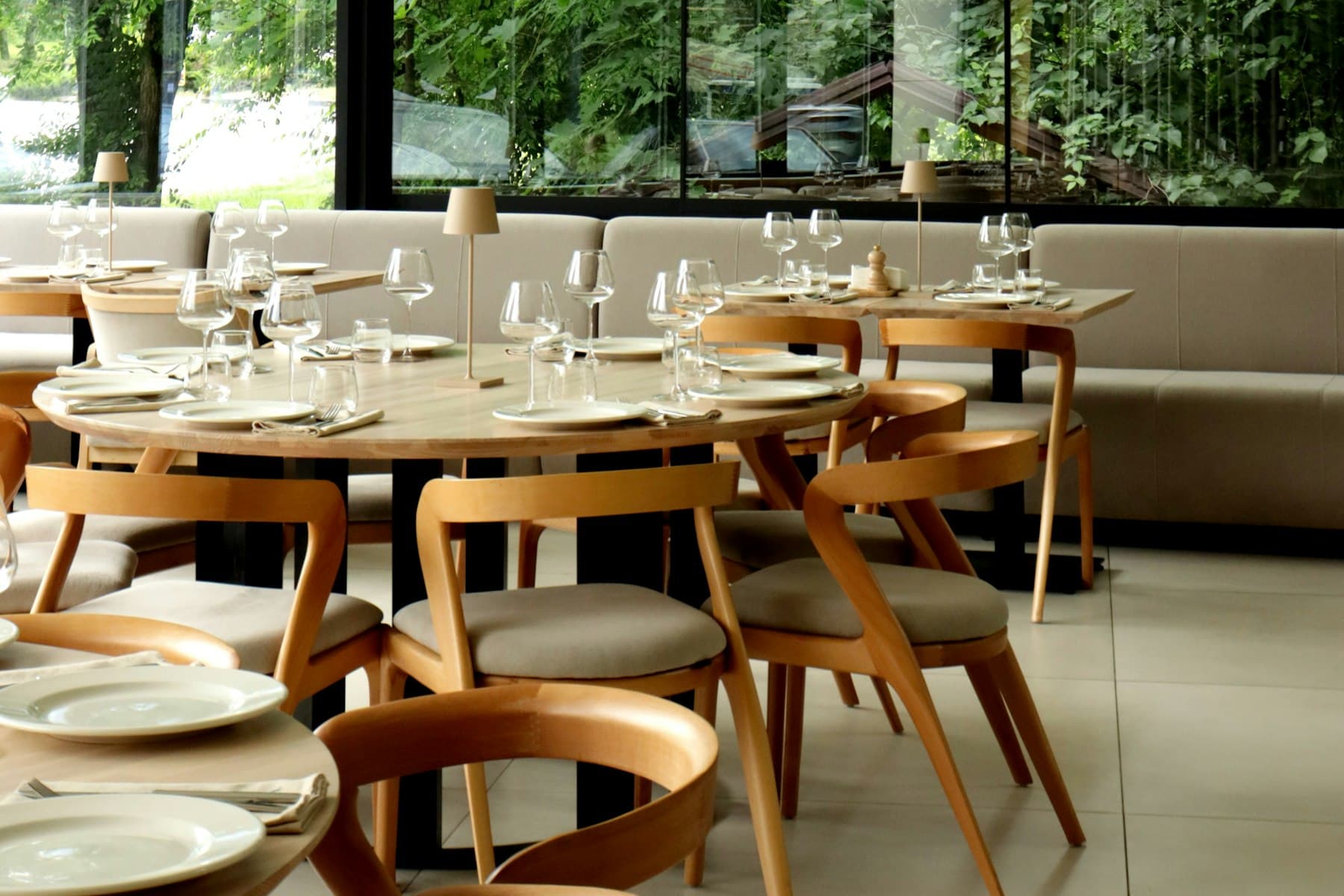
Start with the room's job
Choose the setting that can support your guests, the tasting, and the full access window. An office can be an excellent client setting when it offers privacy, comfortable seating, and dependable service access. A private venue can suit an internal team when its food, equipment, and room staff solve work the office would otherwise inherit. The guest's job title alone does not decide the room.
Write down the purpose, expected attendance, arrival pattern, and time available together. Then compare the actual rooms. A seated comparison needs a shared start, clear speech, and table space for glasses. A reception needs room for arrivals, conversation, water, and replenishment. A beautiful room that cannot accommodate the chosen activity is still the wrong fit.
Mobile wine tasting means bringing the hosted activity to a location you identify. That location may be an office or an approved private venue. Venue selection and the mobile service model are related decisions; they are not mutually exclusive packages.
Compare three room models
A restaurant's private room and an empty rented event space create different responsibilities. Use this matrix to ask each room contact specific questions. None of these features is guaranteed by the room category.
| Decision | Your office | Restaurant private room | Rented event space |
|---|---|---|---|
| Getting guests there | Convenient for on-site staff; external guests may need registration and an escort | Separate journey and arrival instructions; verify a genuinely private entrance or room if needed | Check address, guest access, elevators, and who manages arrivals |
| Wine and food | Confirm company policy, outside alcohol, catering, and the proposed service arrangement | Ask whether house wines and catering are required and whether an outside host may lead | Identify approved caterers, alcohol-service requirements, and who contracts each provider |
| Equipment | Inventory real glasses, water, tables, chilling space, and waste facilities | Confirm which glasses, linens, furniture, and service staff the booking includes | Treat every rental and delivery as open until the room's inventory is written down |
| Listening and privacy | Test neighboring meetings, announcements, room acoustics, and interruptions | Check doors, background music, adjacent diners, and microphone restrictions | Check sound rules, room divisions, equipment, and other simultaneous bookings |
| Time control | Allow security, setup, staff departure, and cleaning around normal work | Compare the room booking with the hosted period and any dinner service | Include load-in, setup, breakdown, and collection within the contracted access hours |
| Cost structure | Add costs for bringing hospitality into the room, including internal work | Separate minimum spend, room charges, staffing, fees, and any corkage | Add space hire, rentals, delivery, food, service, and cleaning to the tasting quote |
Resolve the questions that can rule a room out
Ask for written approval for the proposed activity before treating either room as feasible. State whether wine is supplied by the venue, a separate operator, or another agreed party, and who serves it. A room reservation or a Certificate of Insurance does not by itself resolve alcohol-service permissions. The operating party should confirm the applicable licensing or permit path with the venue and the New York State Liquor Authority when needed.
Walk the guest route from arrival to the room and restroom. NYC's accessible-event guidance is a useful starting point for physical access, seating, communication needs, and a way to request accommodations. Ask the room contact to resolve the actual needs of your group; a photograph or the label 'accessible' cannot answer every question.
Treat an unanswered requirement as pending. Give it an owner and a deadline before a non-refundable commitment. If the office cannot allow the service, the venue cannot admit your host, or neither can provide the access your guests need, change the room or the plan before comparing decorative details.
- Permission: proposed food, wine, outside host, and service arrangement approved
- Access: guest route and service route workable for the group and equipment
- Capacity: approved seated or standing layout fits the actual activity
- Time: setup and closeout fit within the confirmed access window
- Ownership: one contact can answer each remaining operational question
Compare complete costs on the same brief
Send both options the same attendance estimate, wine direction, food scope, hosted duration, participation needs, and access times. Ask each supplier to mark a cost as included, separate, pending, or not applicable. A blank cell is not a zero. Keep the cost of the activity separate from the cost of making the room ready for it.
Room-adjusted event total = tasting scope + room charges + required food or beverage spend not already counted + missing equipment and service + delivery and closeout + quoted taxes and fees. This is a comparison framework, not a tax calculation or an estimate of NYC market prices. Avoid double-counting costs already included in another line.
If a venue has a minimum spend, ask what counts toward it and how any shortfall is charged. If it has a service charge, ask what that covers and whether gratuity is separate. Record the answer from that venue's agreement. An office may avoid a room fee while still needing rentals, porter time, security, and a staff member to stay through collection.
| Cost or dependency | Office option | Venue option | Question to resolve |
|---|---|---|---|
| Hosted tasting and wine | Enter quote / included / pending | Enter quote / included / pending | Same flight assumptions, guest count, staff roles, and hosted time? |
| Room and minimum spend | Enter room or internal charges | Enter room charge and minimum terms | Which purchases count toward the minimum? Is any shortfall separate? |
| Food and alternatives | Name supplier and cost | Identify required house or approved catering | Same food coverage, water, and agreed zero-proof participation? |
| Equipment and service | List missing rentals and labor | Confirm what house inventory includes | Enough glasses, tables, chilling, staff, and collection service? |
| Access and closeout | Add delivery, security, cleaning, collection | Add access, overtime, cleaning, collection | Do both include the entire time the room is occupied? |
| Terms and fees | List quoted taxes, fees, deposit, cancellation | List quoted taxes, fees, deposit, cancellation | What changes with headcount, timing, substitutions, or cancellation? |
Use a short decision worksheet
First eliminate options that fail a required permission, access, or timing check. For the feasible rooms, choose your three most important priorities: easy attendance, privacy, shared learning, food service, budget certainty, or low internal workload. Mark each room as confirmed, workable with a quoted addition, or unresolved against those priorities.
Keep the reason beside each judgment. 'Office: confirmed quiet room and no guest travel; glasses and cleanup still unpriced' is more useful than 'office: cheaper.' 'Restaurant: meal service included; outside wine not allowed' tells the host to design a flight around the house list instead of promising outside bottles. The worksheet should expose a tradeoff, not generate a falsely precise score.
Before choosing, identify who signs for the room, who signs for the tasting, and whether cancellation of one leaves you committed to the other. Put proposal deadlines, room-hold expiries, and headcount deadlines on the same planning calendar.
Two illustrative briefs, with different room decisions
These hypothetical examples show how a room decision follows the event constraints. They are not past client events, guaranteed formats, or quoted packages.
| Brief | Room direction to investigate | What must be confirmed |
|---|---|---|
| 24 colleagues already on site; shared 60-minute activity after a meeting; no dinner | An office seated flight may preserve the common start and avoid travel | Approved service, suitable tables and glasses, quiet room, zero-proof choices, setup before the meeting ends, and a cleanup owner |
| 18 clients arrive from different locations; tasting followed by a meal; office closes early | A private restaurant room may join the activity and meal in one booking | Arrival window, privacy, house wine rules, permission for the host, menu and dietary process, minimum spend, and time for introductions |
Check three clocks before you book
The room access window, the hosted tasting, and the food or wider event schedule are different clocks. A 60-minute activity may need time before guests enter and after they leave. Ask the operator for the actual setup and breakdown requirements, then compare them with building and venue access. Do not assume the host's arrival is the guest start time.
In an illustrative office plan, guests arrive at 5:30 p.m., the guided segment runs from 5:45 to 6:30, and conversation ends at 7:00. Setup might be requested from 4:45 and closeout until 7:30, subject to the operator's needs and building approval. This example occupies the room for longer than the guided segment; the quote must say which staff and services cover each period.
A venue with a dinner booking may instead need the flight timed around kitchen service. Agree on who changes the agenda if guests arrive late, a meeting overruns, or food is delayed. Keep a seated place and a welcoming activity for people who decline wine; confirm the actual alternatives before inviting guests.
Turn the choice into a useful proposal request
Send the occasion, guest estimate, date window, preferred room or two shortlisted options, overall budget, and the three priorities you used to compare them. Add the room contact, current permissions, what equipment already exists, food requirements, and the full access window. Label anything still unknown so it can be resolved in the proposal.
WineTasting.NYC operates events directly and also refers requests to independent partners. Before booking, your proposal should identify the event operator, contracting party, payment recipient, and who supplies and serves the wine. A partner's venue, staff, or inventory are not our own.
If you choose an existing office or approved room, request a mobile tasting and specify what must be brought in. If the room is still undecided, say so and ask for the venue responsibilities and costs to be separated. A request starts planning; it does not reserve a date or imply that a particular venue is available or affiliated with WineTasting.NYC.
Quick answers
Wine tasting planning FAQ
Is an office wine tasting always cheaper?
No. Compare complete costs for the same brief. An office may avoid room hire while needing rentals, delivery, food, service labor, security, or cleanup. A venue may include some of those items but impose minimum spend or house-service requirements.
Can a mobile tasting take place in a rented venue?
It can be proposed when the venue allows the planned outside host, wine, food, and service model. Mobile describes bringing the activity to your chosen location. Permission, operator capability, and scope still require confirmation.
Can we bring our own wines to a restaurant private room?
Ask that restaurant directly before sourcing bottles. House-wine requirements, outside-wine permission, corkage, and the role of an outside host vary. Do not treat permission from one room as applying to another.
Does a Certificate of Insurance mean alcohol service is approved?
No. Insurance paperwork, venue permission, and the applicable alcohol-service requirements are separate questions. Ask the operating party and venue to confirm the proposed arrangement and consult the New York State Liquor Authority when needed.
How much room time should we reserve?
Ask for the actual setup, guest, hosted, food-service, breakdown, and collection windows. The room booking must cover the agreed access needs; a 60-minute tasting alone does not describe the full occupancy period.
What if we have not chosen a room?
Send the guest count, occasion, dates, budget, preferred area, and any room options. Identify what is fixed and what is open. Any venue search, rental, availability, and contracting arrangements must be confirmed separately.
Sources and limits
References used for this guide
The notes below explain what each source supports. Provider examples and prices can change; confirm the details for your own event before booking.
- NYC: planning an accessible eventOfficial starting point for access and accommodation planning; checked October 5, 2026.
- New York State Liquor Authority: permit categoriesOfficial permit information; the appropriate arrangement depends on the actual operator and event. Checked October 5, 2026.
- Convive: corporate event optionsIndependent provider example of venue, format, and equipment add-on decisions; checked October 5, 2026. No affiliation implied.
- Let's Talk Wine: corporate tasting FAQIndependent provider example of a supplied tasting scope; checked October 5, 2026. Its inclusions do not establish WineTasting.NYC's scope.